Aligning people enables agile execution. It allows organizations to “pivot” and change direction quickly to seize opportunities. With so much change in the marketplace, it is important for leaders to always be on the same page moving in the same direction.
To pivot well requires strong trust and healthy relationships between leaders. This can only occur if people understand and respect each other. With strong bonds, leaders are more willing to negotiate and agree on their roles and operate as one team versus only working for the benefit of their functions.
Our alignment workshops focus on first building trust and mutual respect. Once engrained, we then facilitate healthy discussions to align business priorities and create win-win agreements between leaders.
Aligning Leaders
When top management understands and is aligned on roles and goals, the whole organization benefits.
Too often, however, problems and delays in execution stem from misalignment between leaders. Rather than fixing problems, people become polarized within their functions. If unresolved, problems deepen and execution suffers.
We work with leadership teams to first build mutual respect and trust. This forms a solid foundation for aligning priorities and resolving differences in a constructive manner.
Our core skill is engaging participants in open, honest discussions to resolve conflicts and to strengthen interpersonal relationships. We know how to bridge differences and manage healthy debates. With strong bonds in place, we can define and align business priorities across leaders and functions.
During our workshop preparation, we co-create the content for each module with our clients. Here is where we add the most value:
| Benefits for Top Management Teams | ||
|---|---|---|
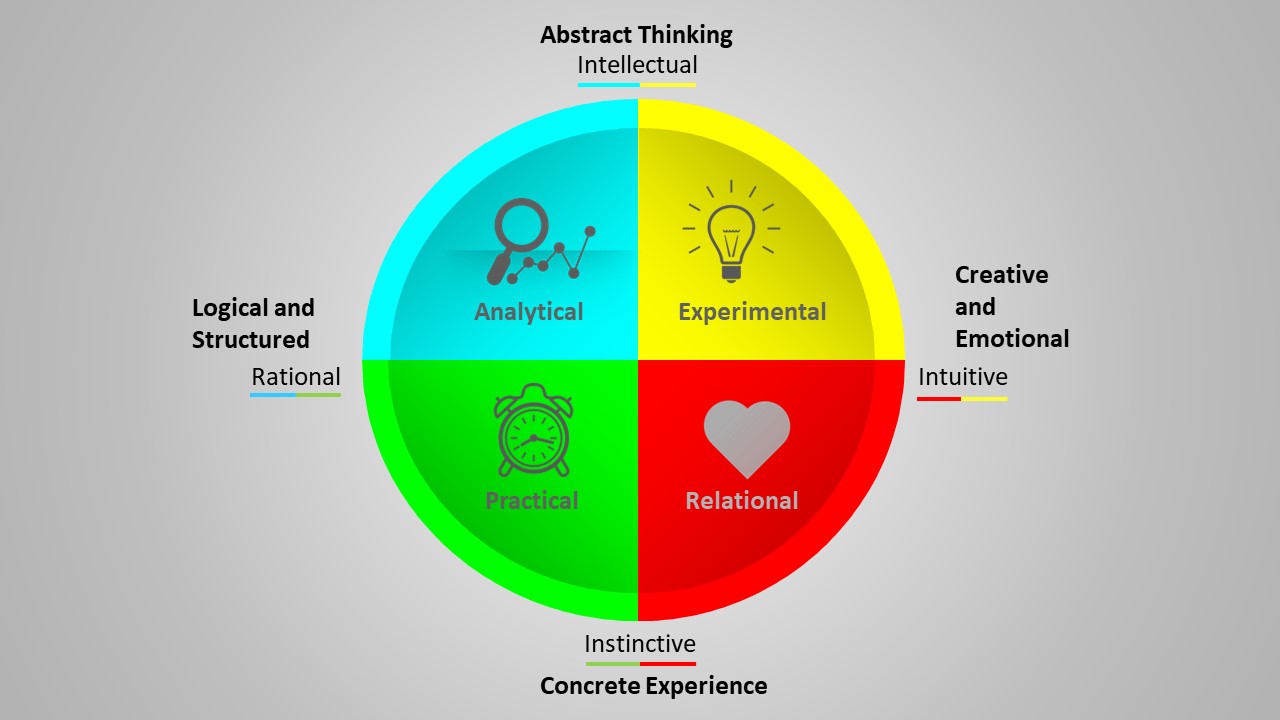
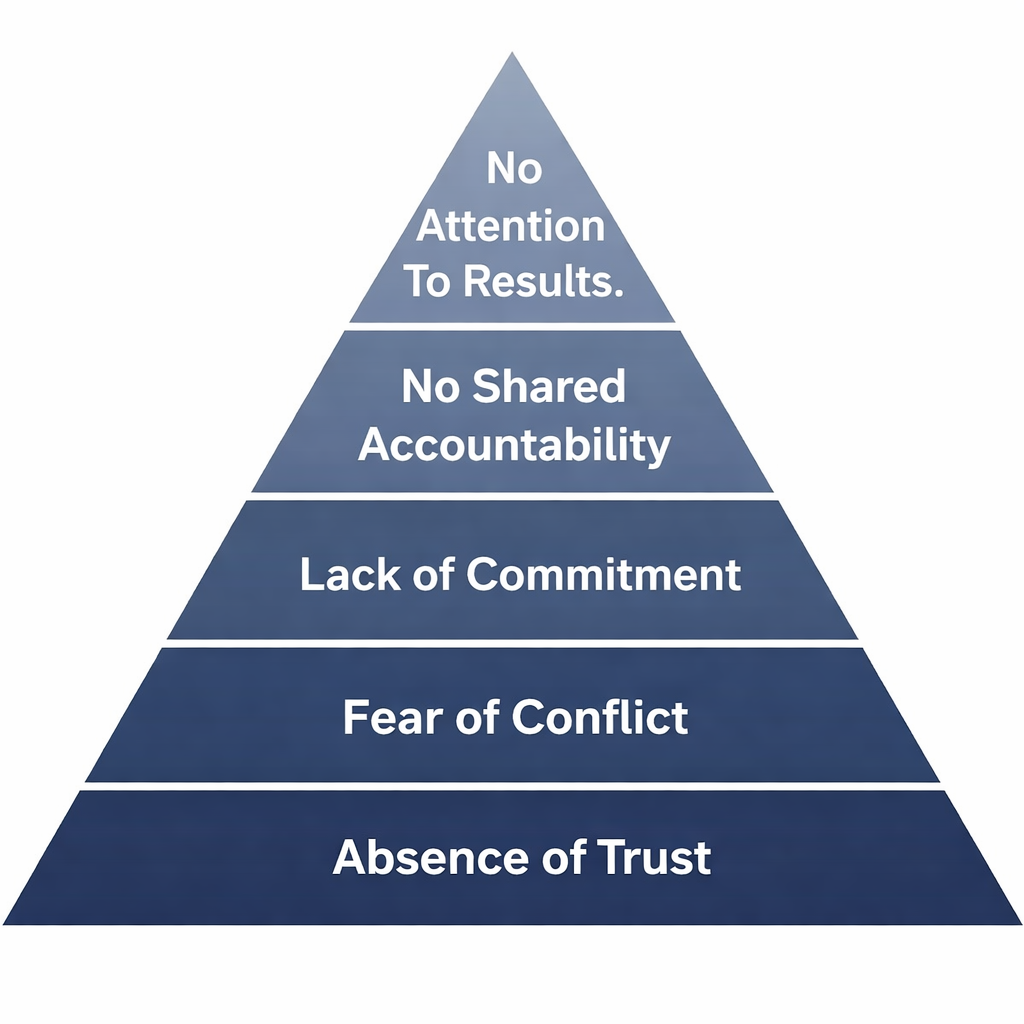
To help bond leaders, we employ management tools such as DiSC, Herrmann Whole Brain, Five Dysfunctions of a Team. These tools, along with our own proven practices, form the backbone of our workshops.
We are experienced in most of the popular individual style assessment tools. One of our favorite for building mutual respect and trust is Herrmann Whole Brain
Herrmann Whole Brain Model
Building Agile Teams
Diverse teamwork encourages innovative ideas and is a competitive advantage. But with diverse team members, the need for mutual respect, trust and effective communication is vital. One tool we use to develop teamwork is The Five Dysfunctions of a Team (P.Lencione). This emphasizes building trust and overcoming the barriers that undermine teamwork and synergy.
Five Dysfunctions of a Team Model
We ask teams to assess themselves. Of particular importance is enhancing collaboration between remote and in-office leaders. In our workshops, participants learn what it takes to be a high performing, agile team. We spend ample time "learning by doing."
The benefits of our high performing team workshops are:
| Benefits for Management Teams | ||
|---|---|---|
Contact
-
- larrychao@chaogroup.com
- BANGKOK | NEWYORK
- Address
- Four Wings Mansion 32/1-4 Sukhumvit 3 North Klongtoey, Wattana, Bangkok 10110 Thailand